YachtWorld, Rightboat or your own website: where a Southampton yacht broker's enquiries come from
The portals take the boat searches and the same listing sits on five of them. What a Hamble or Ocean Village broker's own site can win, and how.
By Daniel Stoychev, Webso Digital · 6 October 2026 · 8 min read
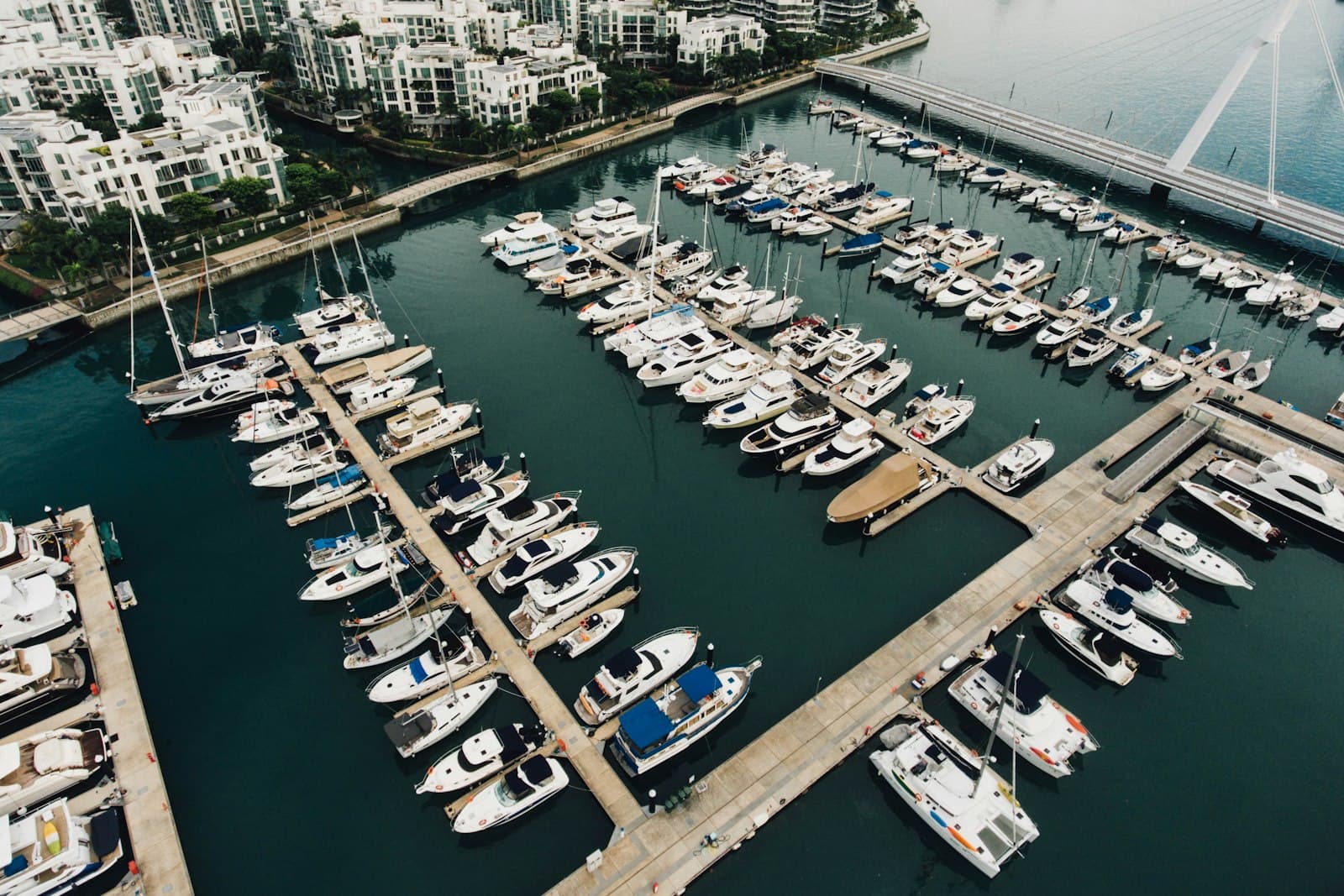
A buyer searching for a boat finds it on a portal: YachtWorld and Boats.com, Rightboat, Apollo Duck, TheYachtMarket, Boatshed. The same listing, with the same photographs and the same text, sits on most of them and on the broker's own site, and Google shows the biggest copy. So a broker's website in Hamble, Swanwick or Ocean Village does not win "Beneteau 40 for sale" and should not be built to. What it wins is everything the portals cannot: the broker's name, the marina, the seller who wants to know what the boat is worth and what the commission is, and the buyer who found the boat on a portal and is now checking who is selling it. Those are the pages that earn, and most broker sites do not have them.
The listing problem, stated plainly
When a broker lists a boat, the details go out through a feed or a copy-and-paste to several portals. The portal pages are on sites with decades of history and millions of visits. The broker's own listing page, with the same text, is on a site with a few hundred. Google sees several copies of one page and picks one to show, and it is almost never the broker's. This is not a penalty and it is not something a plug-in fixes. It is how duplicate content is handled, and the honest answer is to stop expecting the listing page to rank and to build the pages that can.
There is one exception. A listing page with real additional content, a walkthrough video shot on the pontoon, a survey summary, the owner's maintenance log, a paragraph on why this particular boat is priced as it is, is no longer a copy. It takes an hour per boat and most brokers will do it for the boats that justify it. For the rest, let the portals sell the boat and let your site sell you.
What the broker's own site can win
| The search | Who makes it | The page |
|---|---|---|
| yacht brokers Hamble, boat brokers Southampton, yacht brokerage Swanwick | Sellers deciding who to list with, buyers checking a broker | The home page and one page per marina you work from, with the pontoon, the office and the people on it |
| sell my boat Southampton, how much is my yacht worth, yacht broker commission UK | Sellers, before they ring anyone | A selling page that answers the commission question, the valuation process and how long boats of each type take to sell |
| [broker name] reviews, [broker name] Hamble | Buyers who found a boat on a portal and are checking the seller | The Google Business Profile with reviews, and an About page with real names |
| yacht survey Hamble, berth Hamble River, boat storage Southampton winter | Owners, all year | Service pages for anything you actually offer or can honestly refer, and nothing for what you do not |
The selling page is the one that pays. Sellers search before they phone, they want the commission figure and the process, and a broker that publishes both reads as the broker with nothing to hide. The portals do not have that page, because they are not brokers.
The marina pages, and why they are not area pages
Hamble, Swanwick, Ocean Village, Shamrock Quay, Universal Marina and Port Hamble are different places with different boats, different berth holders and different buyers. A page per marina works when it is about that marina: where the office or the pontoon is, which boats tend to sell there, how a viewing is arranged, where a buyer parks. A page per marina with the name swapped is the trades-site mistake in a sailing jacket, and Google treats it the same way.
Proof, for a trade built on trust
- The sold archive: the boats you have actually sold, with the month and the marina, kept on the site as a page. Buyers and sellers both read it, and it is the one thing a new broker cannot fake.
- Membership of a trade body, named and linked to your entry, so the claim can be checked in ten seconds.
- Reviews on the Google profile from both sides of a sale, asked for at the handover.
- The people: names, faces, what each of you sails. A buyer about to transfer a six-figure sum wants to know who is at the other end of the phone.
Search your own broker name with the word "reviews" after it. That is what a buyer does before paying a deposit. If the first result is a portal page rather than your profile, the profile needs the work before the site does.
The season, briefly
Listings rise in late winter and spring as owners decide to sell before the season, and buyer searches follow into early summer; the autumn brings a second, smaller wave as owners weigh the winter berth. The Southampton International Boat Show in September puts the whole trade in one place for ten days and sends a spike of brand searches afterwards. A selling page and the marina pages should be live by February; a page published in May has missed the spring sellers.
The listing page that is not a copy: a checklist
- A paragraph in your own words on why this boat is priced where it is, which no portal carries.
- The walkthrough video, shot on the pontoon on a dry day, with the engine started.
- The survey summary and the maintenance history, as a short table rather than a PDF.
- The berth and the marina named, with the viewing arrangements for that marina.
- The broker's name and direct number on the page, not a generic enquiry form that goes to an inbox nobody owns.
- The sold price band and the time to sell for the last two or three comparable boats you handled, which is the sentence a seller reads twice.
Do this for the ten boats that justify it and leave the rest to the portals. The ten become pages Google can show on their own, and the sold archive grows from them.
What to expect
The brand and marina searches move first, within weeks, because few brokers have written those pages properly. The selling-page searches take longer and are worth more. Watch two things in Search Console: impressions for queries with a marina name or the word "sell" in them, and enquiries that come from the site rather than the portals, which your enquiry form can tell you if it asks one question. Do not watch the listing pages; they belong to the portals, and that is fine.
Written by
Web developer and SEO specialist at Webso Digital, working remotely from Wrexham for marine businesses, clinics and Southampton firms. Builds the sites by hand and writes the guides from the work. Not a lawyer: where a guide covers a rule, it quotes the regulator and links to it, and the regulator's page is the one to rely on.
Questions on this topic
Why does our listing page never rank when the same boat ranks on YachtWorld?
Because it is the same page. Google shows one copy of duplicated content and picks the site with the history and the traffic. The fix is not a plug-in; it is accepting that the portals sell the boat and building the pages on your site that the portals cannot have.
Should a yacht broker have a page for each marina?
One for each marina you genuinely work from, about that marina: the pontoon, the office, the boats that sell there, how viewings work. Not one per marina with the name swapped.
Should we publish our commission rate?
Yes. "Yacht broker commission" is what sellers search before they ring anyone, and the broker that answers it on the page is the one they ring. Publish the rate and what it includes.
Is it worth adding a video to the listing?
For the boats that justify the hour, yes. A walkthrough shot on the pontoon makes your listing page a different page from the portal copies, and it is what a buyer two hundred miles away watches before booking a viewing.
When should the pages be ready?
By February, before the spring sellers decide who to list with. The Boat Show in September sends a second wave of brand searches, so the profile and the reviews need to be in order by then.